
Linear guides
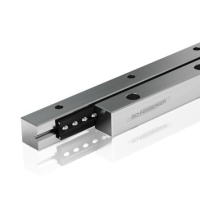
Linear guides form the basis of a linear bearing. They usually take the form of a metal strip with fixing holes and a raceway for the rolling elements of the bearing cages. The raceway can be flat or profiled. The main task of linear guides is to transfer pressure from the machine parts to which they are bolted to the rolling elements and to provide the rolling elements with the best possible conditions for correct operation.


Characteristics
The shape and cross-sectional area of the guideway determine the rigidity of the bearing and the direction of loading. Flat guideways (type J/S) can carry load in the direction perpendicular to the plane of the raceway. Profiled guides (types M/V, N/O, R, RN, RNG) can carry loads in directions perpendicular to the feed axis.
The permissible bearing load carrying capacity depends on the type and number of rolling elements used and the quality of the guideway raceways.
Linear guides are provided with mounting holes by which the guides are bolted to the machine housing.


Material
As a standard, linear guides are made from steel 1.2842 with a hardness of 58-62 HRC. A stainless version in steel 1.4034 with a hardness of min. 54 HRC is also available. Ceramics (e.g ZrO2). Łożysko wykonane z ceramiki jest niezastąpione w pewnych zastosowaniach. Może pracować w próżni i nie wymaga smarowania.
Accessories
On the front side, the guides have threaded holes to which the end pieces or end pieces with dirt wipers can be attached. The purpose of the dirt wipers is to wipe dirt away from the guide raceways - to keep the dirt away from the rolling elements and to keep the lubricant inside the bearing.


